Sin and Mercy
The Commandments, sin, and the way back to God
Thou madest us for Thyself, and our heart is restless, until it repose in Thee.
In plain words
You made us for Yourself, Lord, and our hearts are restless until they rest in You.
A modern paraphrase, not the saint’s own words.
God makes a greater speed to pardon a penitent sinner than a mother to snatch her child out of the fire.
In plain words
God is quicker to forgive a sinner who is sorry than a mother is to snatch her child out of a fire.
A modern paraphrase, not the saint’s own words.
The greater the sinner, the greater the right he has to My mercy.
God’s Law
Sin
Mercy
History
God gave His Law to Moses on Mount Sinai, and Jesus came not to abolish it but to fulfill it, showing that its heart is love. On the evening of His Resurrection He gave His Apostles the power to forgive sins (John 20:22–23). In the first centuries, Christians who had committed very grave sins confessed and did public penance, sometimes for years, before being welcomed back to Communion.
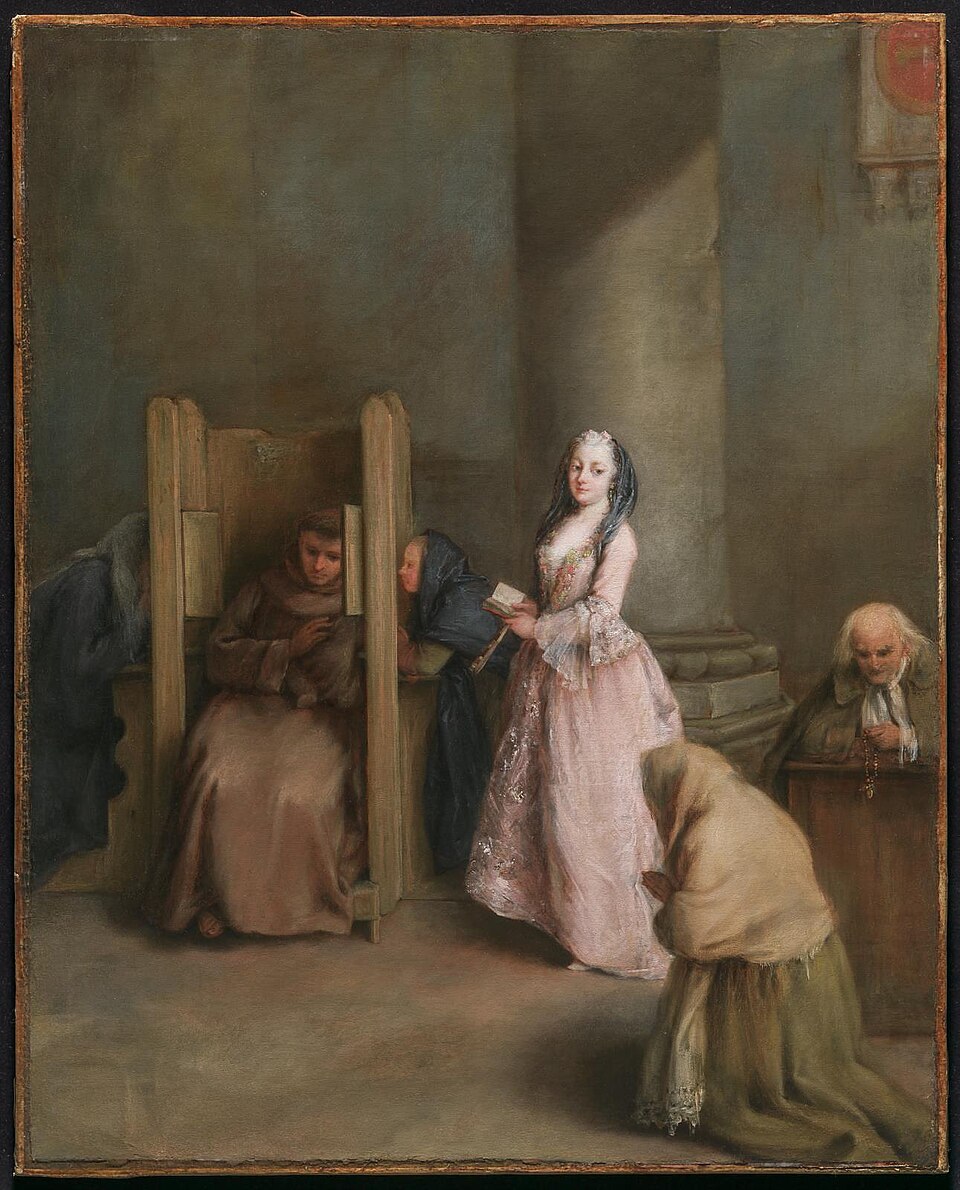
In the 600s, Irish missionaries brought to Europe the practice of confessing privately to a priest, as often as needed, which is how we confess today. In 1215 the Fourth Lateran Council asked every Catholic to confess at least once a year. In the 1500s St. Charles Borromeo, Archbishop of Milan, is credited with bringing in the confessional with its screen, so that people could confess with privacy and trust.
Many saints spent long hours hearing confessions. St. John Vianney, the Curé of Ars, heard confessions for many hours every day, and thousands of people traveled to his little village to confess to him. Today Catholics can confess behind a screen or face to face, and many parishes offer Confession every week, especially during Advent and Lent.