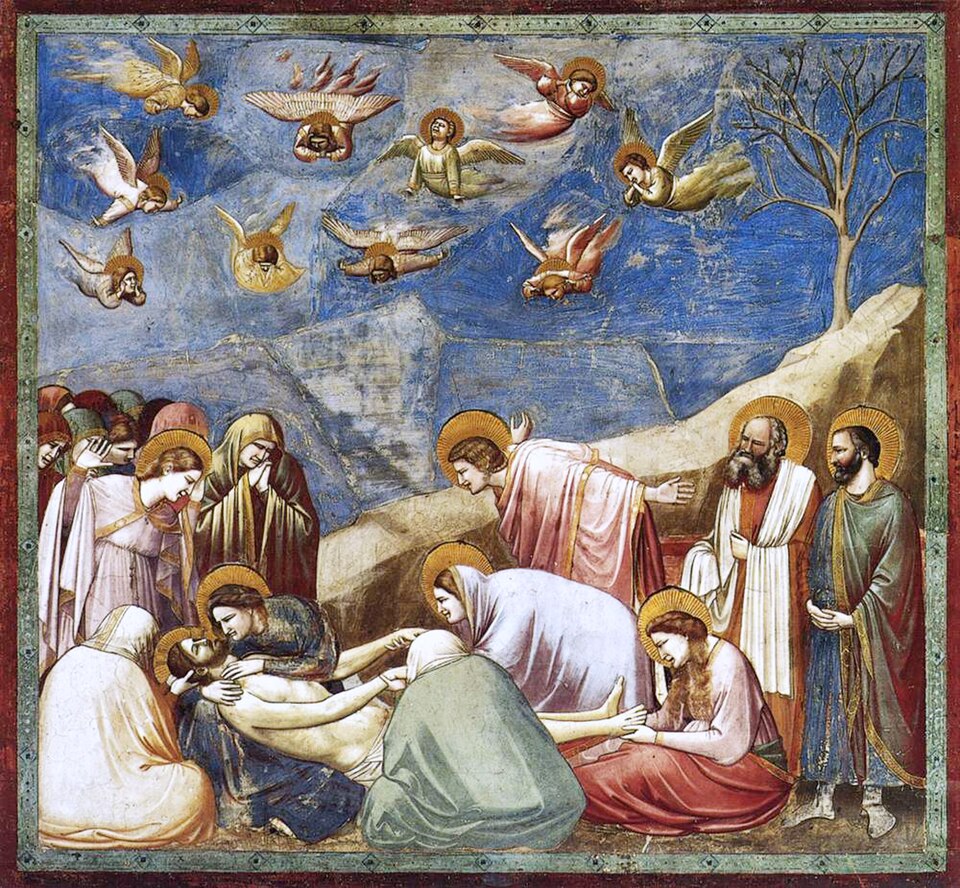
The Passion
The suffering and death of Jesus, from the Upper Room to the tomb
Apart from the cross there is no other ladder by which we may get to heaven.
Whoever wishes to live perfectly should do nothing but disdain what Christ disdained on the cross and desire what he desired, for the cross exemplifies every virtue.
In plain words
If you want to live a truly good life, turn away from what Christ turned away from on the Cross, and long for what He longed for. Every virtue can be seen in the Cross.
A modern paraphrase, not the saint’s own words.
We adore you, Lord Jesus Christ, here and in all your churches in the whole world, and we bless you, because by your holy cross you have redeemed the world.
The Events of the Passion
Praying the Passion
History
From the very beginning, Christians remembered the Passion. St. Paul wrote, “We preach Christ crucified” (1 Corinthians 1:23). In the early 380s a pilgrim named Egeria described Holy Week in Jerusalem: on Good Friday the wood of the Cross was set out at Golgotha, and the people came forward one by one to venerate it, as Catholics still do every Good Friday.
Pilgrims longed to walk the road Jesus walked, from Pilate’s court to Calvary. In 1342 the Franciscans were made the guardians of the holy places, and they led pilgrims along the Via Dolorosa, stopping to pray at each place. People who could never travel to Jerusalem began to make the same journey in prayer at home, and so the Stations of the Cross were born.
In 1731 Pope Clement XII allowed the Stations in every church and fixed their number at fourteen. St. Leonard of Port Maurice, a Franciscan, set up more than 570 sets of them, including one in the Colosseum in Rome. Today every Catholic church has the Stations on its walls, and during Lent parishes pray them together on Fridays.