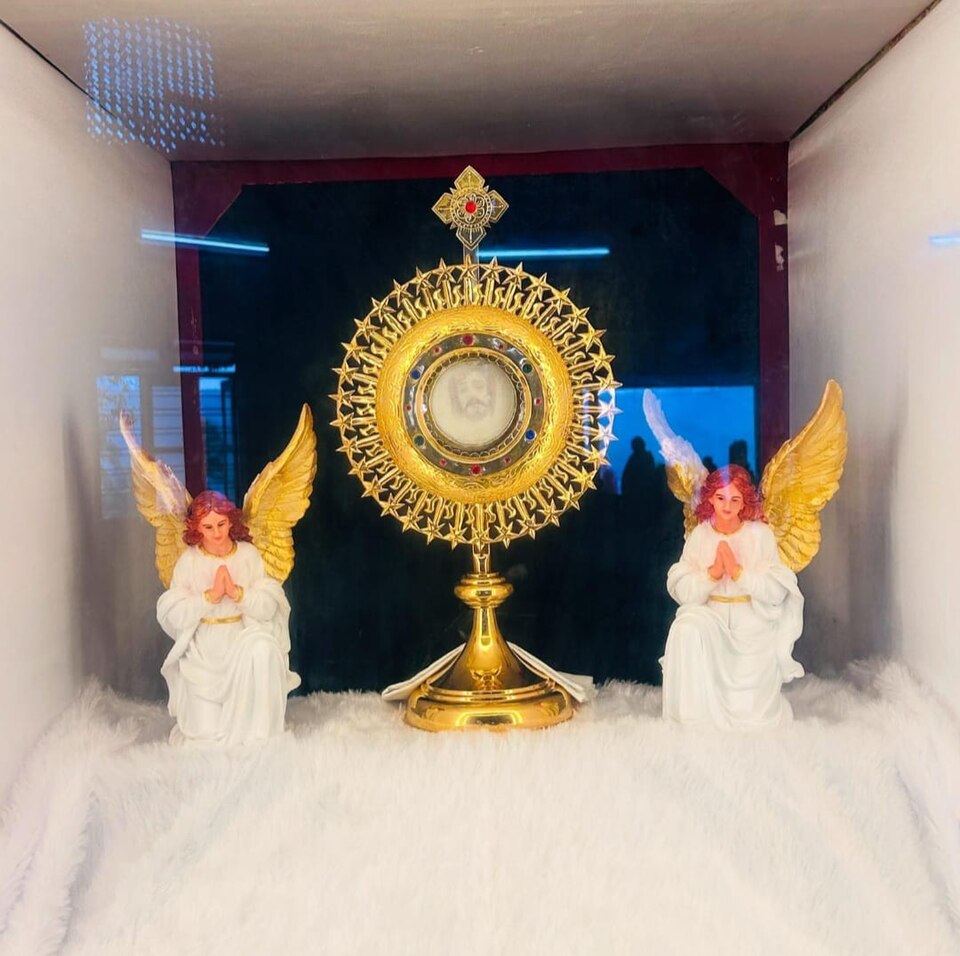
At every Mass, the bread and wine truly become the Body and Blood of Christ, though they still look and taste like bread and wine. Now and then, God has given a visible sign of what is always true: a Host seen to bleed or to become flesh, or Hosts kept whole and fresh against every law of nature. These are called Eucharistic miracles. Many began when someone, even a priest, doubted the Real Presence.
How the Church Judges Them
The Church is careful. The local bishop studies each event, often with the help of doctors and scientists, before he allows it to be honored publicly. Today his decision must also be approved by the Holy See. Only miracles recognized by the Church are listed here. Even then, a Eucharistic miracle is a private revelation: Catholics may believe it freely, but are never required to. Our faith rests on the words of Jesus, “This is my body” (Luke 22:19), not on miracles. The miracles are gifts that point back to every Mass.
A Catalog Through the Centuries
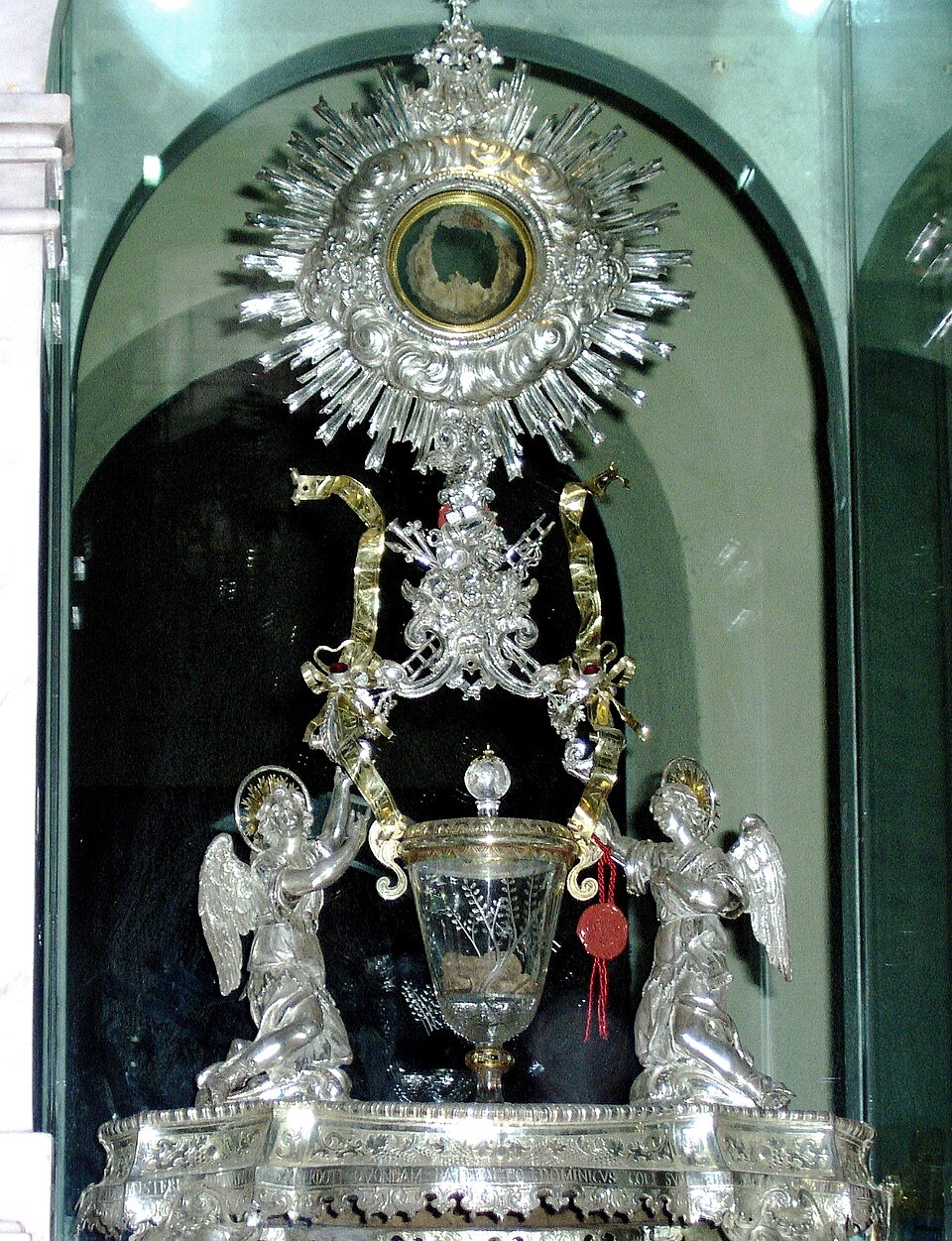
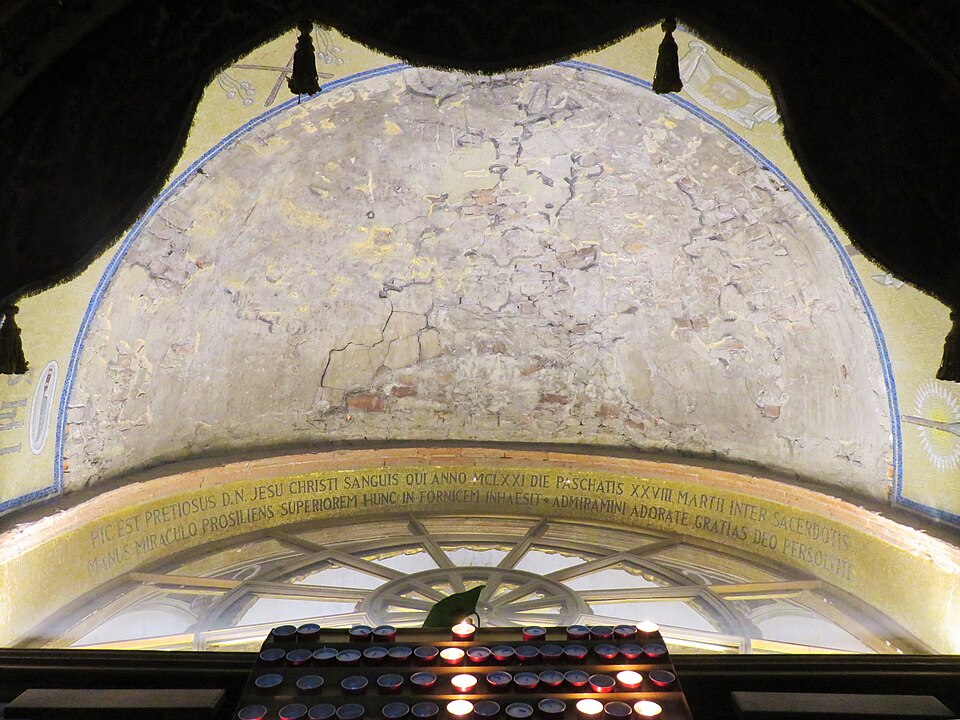
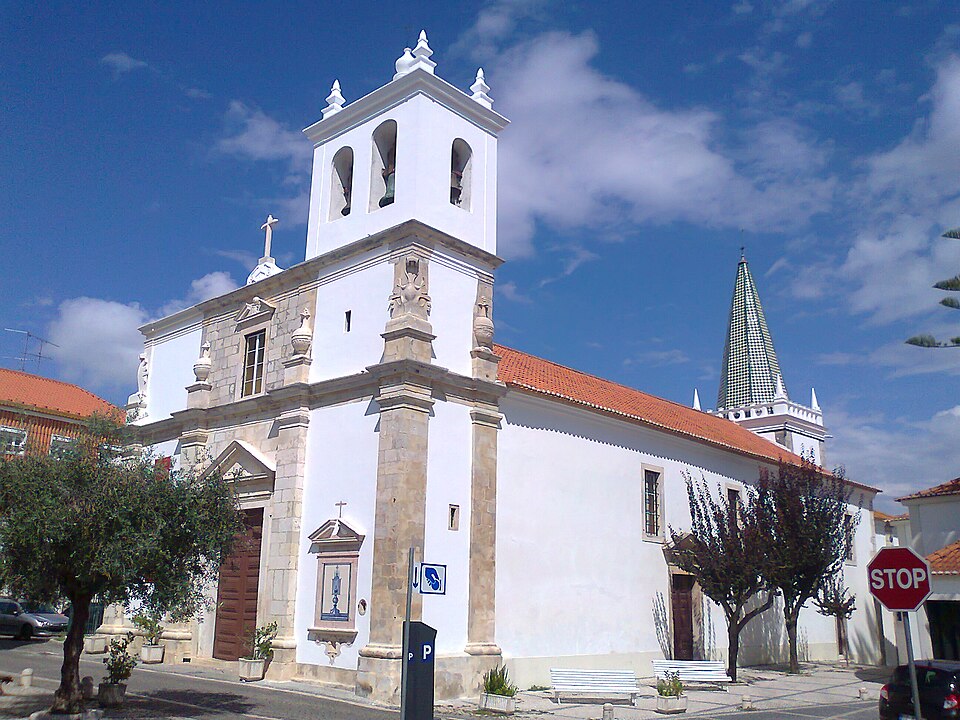
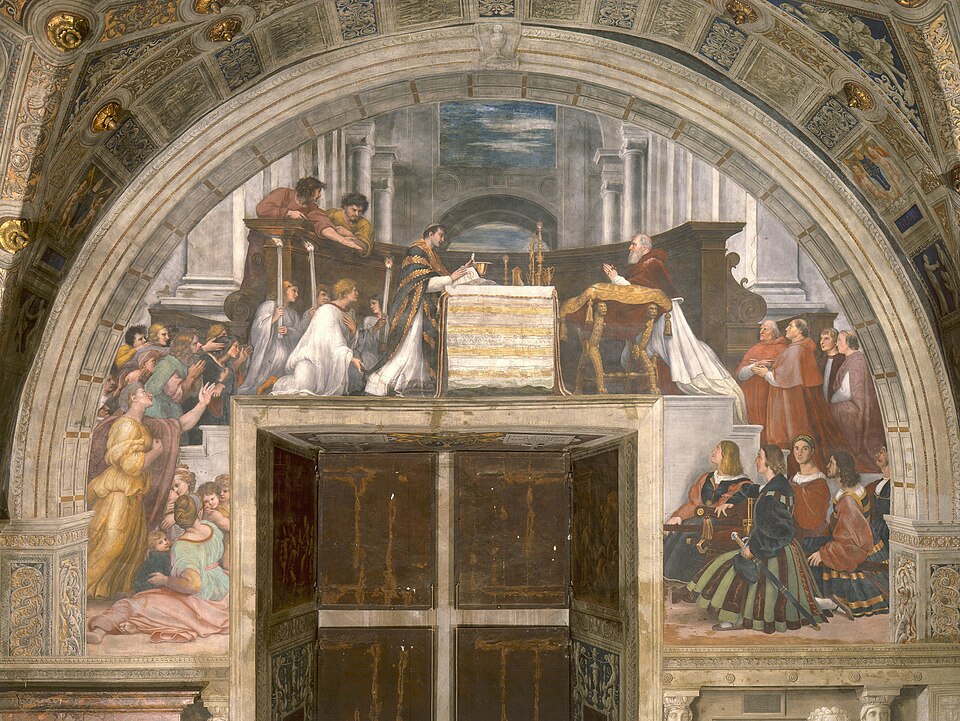
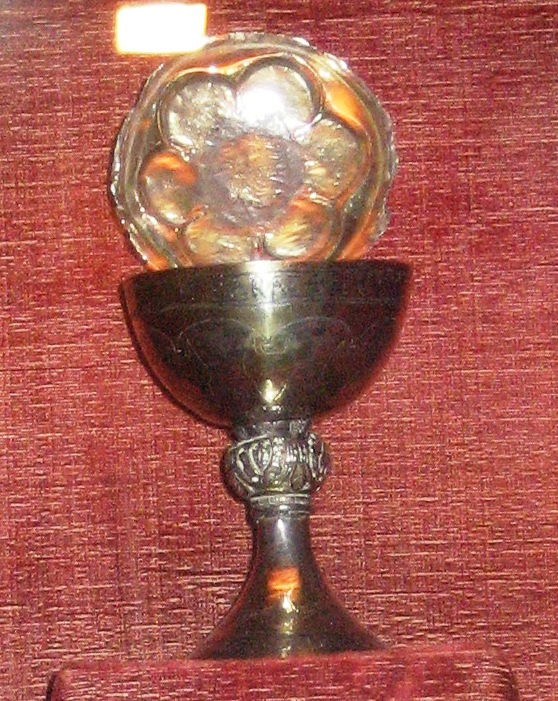
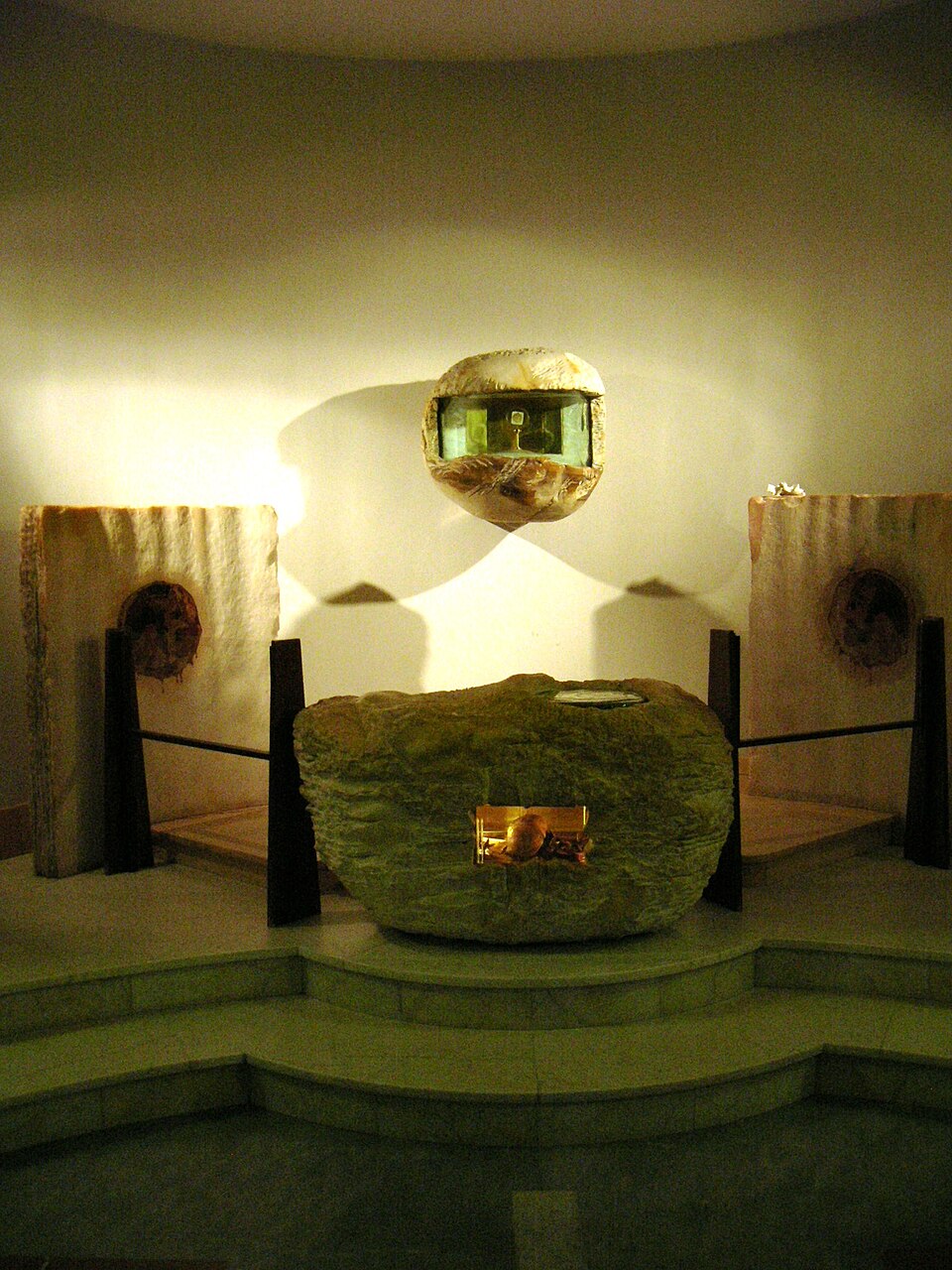
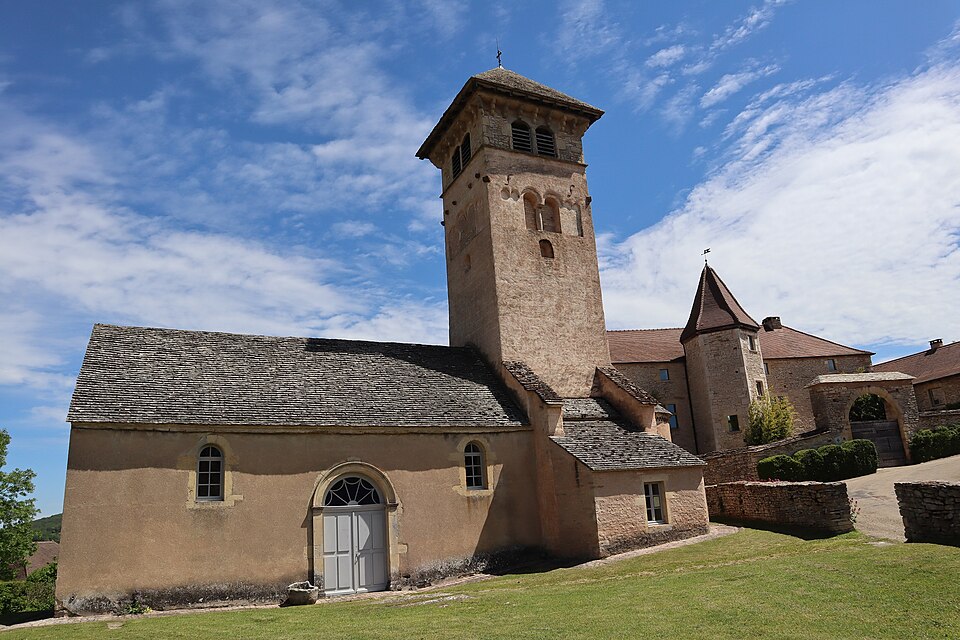
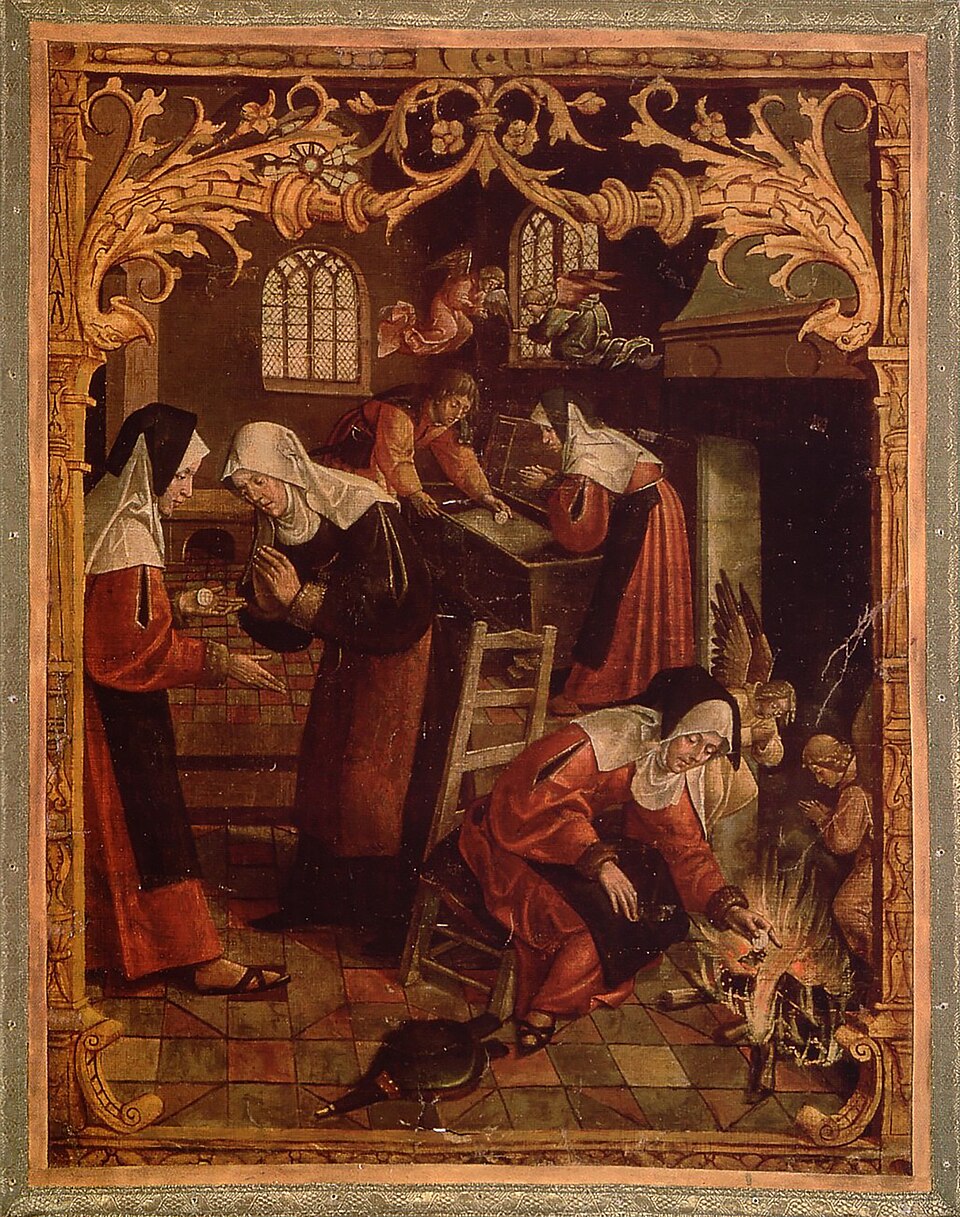
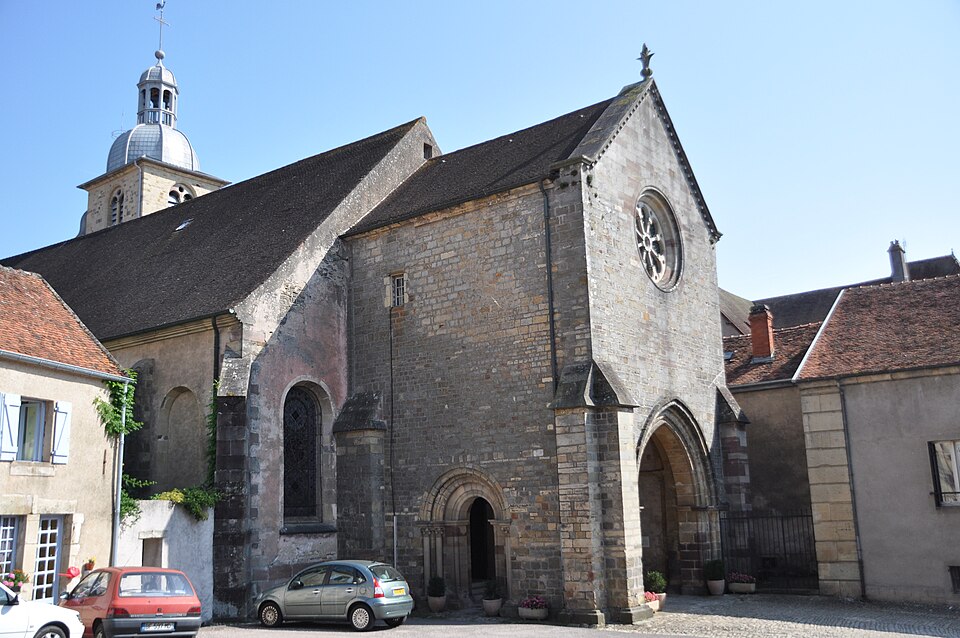
700sLanciano, ItalyAt the words of consecration, a doubting monk saw the Host become flesh and the wine become blood.Photo by Junior · source · Public domain1171Ferrara, ItalyOn Easter Sunday, as the priest broke the Host, blood sprang from it and spattered the vault above the altar. The stained vault can still be seen in the Basilica of Santa Maria in Vado.Photo by Lungoleno · source · CC BY-SA 4.01200sSantarém, PortugalA woman stole a Host for a sorceress; it bled in her veil. It is kept in the Church of the Holy Miracle.Photo by GualdimG · source · CC BY-SA 4.01263Bolsena and Orvieto, ItalyA Host bled onto the altar cloth at the Mass of a doubting priest. The next year the Pope made Corpus Christi a feast for the whole Church.Raphael · source · Public domainAbout 1300O Cebreiro, SpainOn the pilgrim road to Santiago, a farmer climbed through a snowstorm to Mass. As the monk, who had little faith, said the words of consecration, the Host became flesh and the wine blood. The chalice is still kept in the village church.Photo by FCPB · source · CC BY 3.01330Cascia, ItalyA priest carelessly carried a Host to a sick man between the pages of his prayer book. When he opened it, the Host had bled and stained the pages. A page is kept in the Basilica of St. Rita in Cascia.Photo by Mentnafunangann · source · CC BY-SA 3.01331Blanot, FranceAt the Easter Mass a Host fell onto the cloth held under a communicant’s chin and left a spot of blood. The cloth is shown every year on Corpus Christi.Photo by GO69 · source · CC BY-SA 4.01345Amsterdam, NetherlandsA Host that a dying man could not keep down was put in the fire, as was the custom, and found unharmed the next morning. Each March thousands walk the city at night in silence in its memory.Painting, about 1555 · source · Public domain1608Faverney, FranceA fire in the night destroyed the altar of the abbey church. The monstrance with two Hosts was found unharmed, hanging in the air, where it stayed for about thirty-three hours.Photo by Ginette Mathis · source · CC BY-SA 3.01730Siena, ItalyStolen Hosts were found three days later. Nearly three hundred years on, they are still whole and fresh.Photo by Sailko · source · CC BY 3.02001Chirattakonam, IndiaDuring Adoration, an image like the face of Christ appeared on the Host in the monstrance.2008Sokółka, PolandA dropped Host, placed in water, showed a red spot; doctors found it most resembled human heart muscle.Photo by migjan · source · CC BY-SA 4.02013Legnica, PolandOn Christmas Day a dropped Host, placed in water, showed red stains; tests found human heart tissue. The bishop recognized it in 2016.Photo by Emilia Ernst · source · CC BY-SA 4.02013Vilakkannur, IndiaDuring Mass, an image like the face of Jesus appeared on the Host. The Holy See recognized it in 2025.Photo by Internet mission · source · CC BY-SA 4.0
The four with links have tablets of their own. This is only a selection: the Church keeps no single official list, and counts of recognized Eucharistic miracles run from about one hundred to over one hundred and forty. A few famous cases, such as Buenos Aires (1990s) and Tixtla, Mexico (2006), are left out because we could not confirm a final decision by the Church.
St. Carlo Acutis’s List
As a teenager, St. Carlo Acutis (1991–2006) set out to make the Eucharistic miracles recognized by the Church better known. Starting in 2002, he spent about two and a half years, with help from his family, gathering their stories and photographs into an exhibition, The Eucharistic Miracles of the World. It has since been shown in thousands of parishes and in more than a hundred universities, and its panels and his full list, country by country, are online at miracolieucaristici.org. He hoped that people who saw them would come to believe, as he did, that Jesus is truly present in the tabernacle.